
2D Shapes
2D Shapes
Your child needs to be familiar with 2D shapes for their exam. A 2D shape is a flat area, you can think of it as a sheet of paper. They have length and width but no depth.
Quadrilaterals
A quadrilateral shape is a 2D shape that has four sides.
The notation of arrows on the sides of the shapes means that those two sides are parallel.
Some examples of quadrilateral shapes are:
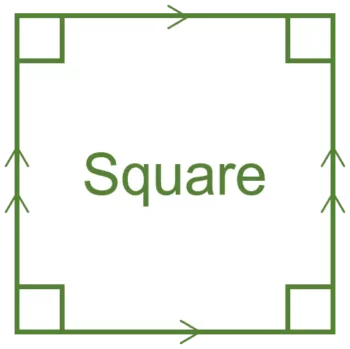
Square:
- equal sides
- right angles
- pairs of parallel sides
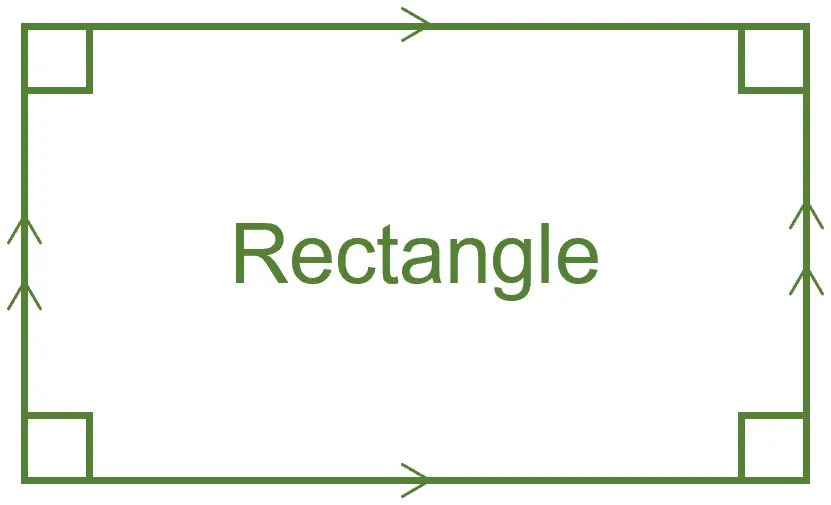
Rectangle:
- pairs of equal sides
- right angles
- pairs of parallel sides
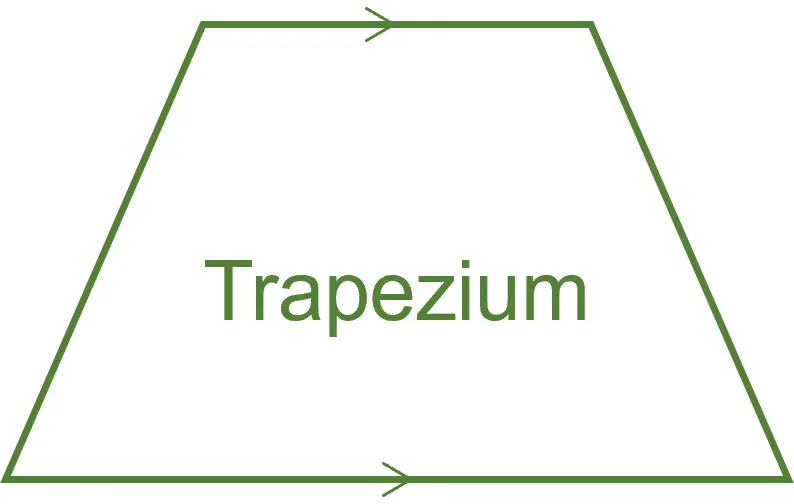
Trapezium:
- pair of parallel sides
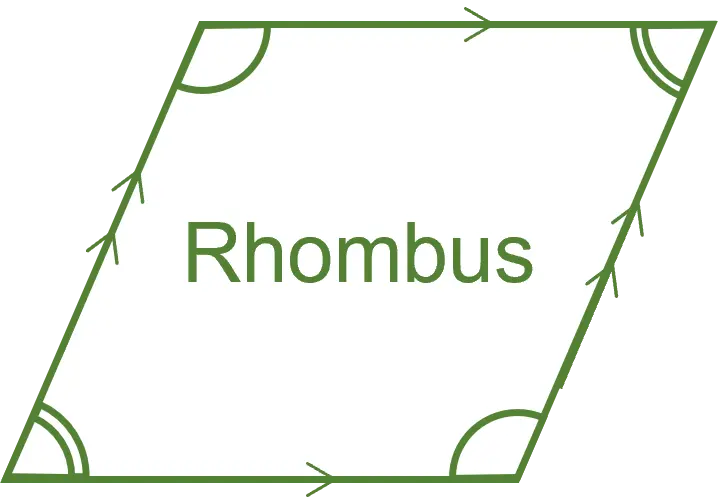
Rhombus:
- equal sides
- equal acute angles (less than )
- equal obtuse angles (greater than )
- pairs of parallel sides
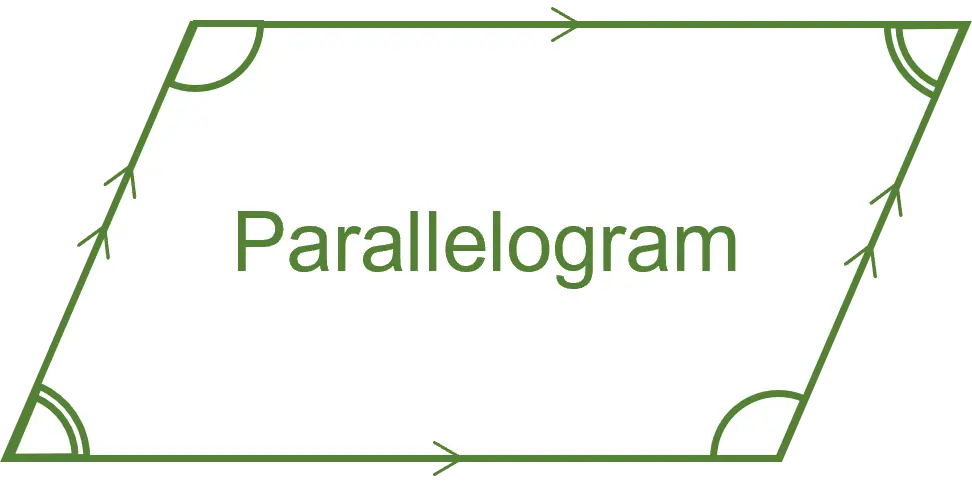
Parallelogram:
- pairs of equal sides
- equal acute angles (less than )
- equal obtuse angles (greater than )
- pairs of parallel sides
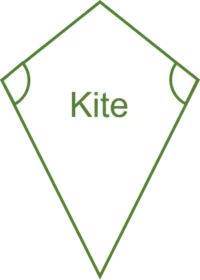
Kite:
- pairs of equal sides
- equal angles

Triangles
Triangles are shapes with three sides and three angles.
There are different types of triangle that have different properties.
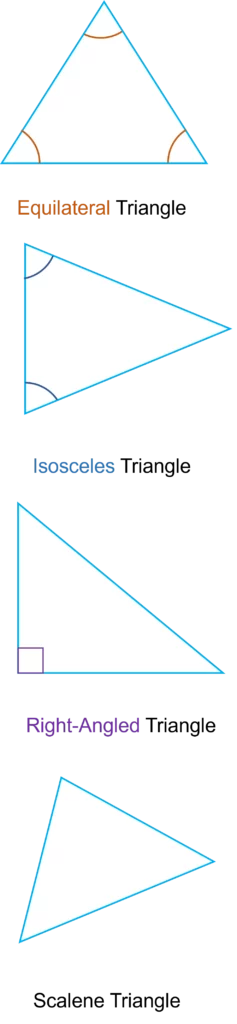
Equilateral Triangle:
- equal angles
- equal sides
Isosceles Triangle:
- equal angles
- equal sides
Right-Angled Triangle:
- right angle
Right-angled triangles can also be scalene or isosceles and have other properties but they just have to have right angle to class as a right-angled triangle.
Scalene Triangle:
- No equal sides
- No equal angles
Circles
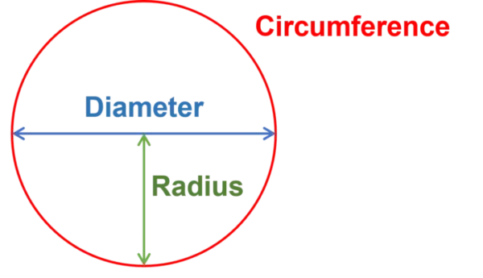
A circle just has one side and no corners.
- The circumference is the length of the outside of the circle.
- The diameter is the length from one side of the circle to the opposite side. The diameter must pass through the centre of the circle.
- The radius is half of the length of the diameter. This is an important fact for your child to remember as they may be asked a question about it in their exam.
Other Polygons
So, far we have only looked at 2D shapes with or less sides.
But your child should be aware of other shapes that have more than sides and be able to identify them.
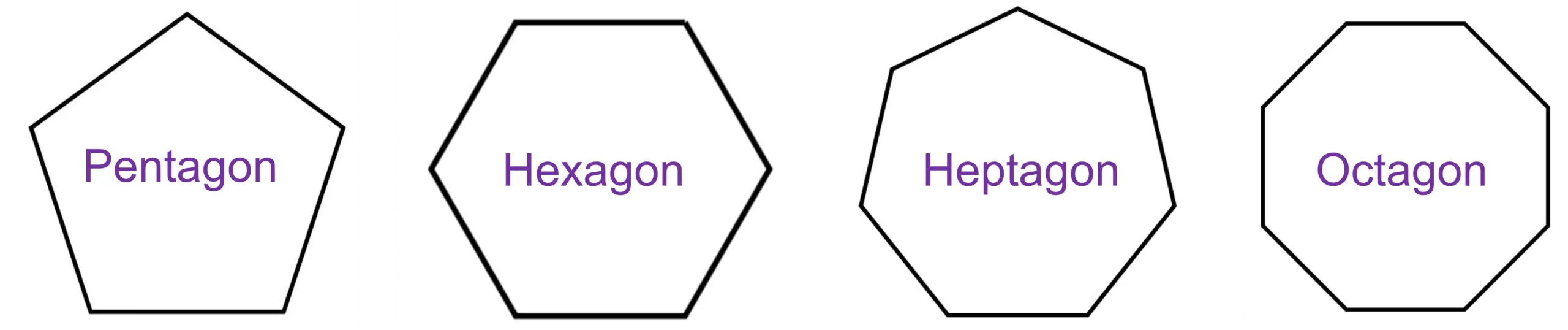
A polygon is a word used to describe these 2D shapes. A polygon is regular when all of the sides and angles are the same size.
For example, a square is a regular quadrilateral as it has equal sides and equal angles.
- A regular pentagon has equal sides and equal angles.
- A regular hexagon has equal sides and equal angles.
- A regular heptagon has equal sides and equal angles.
- A regular octagon has equal sides and equal angles.
2D Shapes Example Questions
Question 1: Which of the following shapes have pairs of parallel sides?
[1 mark]
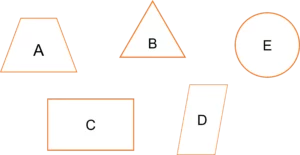
Shape A is a trapezium. So, it has only pair of parallel sides.
Shape B is triangle and shape E is a circle. Both of these shapes have no pairs of parallel sides.
Shape C is a rectangle so does have pairs of parallel sides.
Similarly, shape D is a parallelogram so also has pairs of parallel sides.
So, the answer is shape C and shape D
Question 2: Name the following shapes from a description of their properties.
a) This shape has equal sides and pairs of equal angles.
b) This shape has sides, of which are equal and equal angles.
[2 marks]
a) As this shape has equal sides we can narrow down the possibilities to a square or a rhombus. A square has equal right angles but our shape has pairs of equal angles so it must be a rhombus.
b) Our shape has sides this time which tells us that the shape is a triangle.
Which type of triangle has equal sides and equal angles?
Isosceles triangle
Question 3: A circle has a diameter of .
What is the radius of the circle?
[1 mark]
Your child should be able to recall that the diameter of a circle is double its radius.
Therefore, to find the radius from the diameter, we need to halve it or divide it by .
So, the radius of this circle is