
Sequences
Sequences
Understanding sequences involves finding rules that allow your child to get from one term in a sequence to another. These can be famous sequences or ones that your child will have to work out in their exam.
Number Patterns
Some patterns in numbers your child might be able to recognise without having to work out the rule.
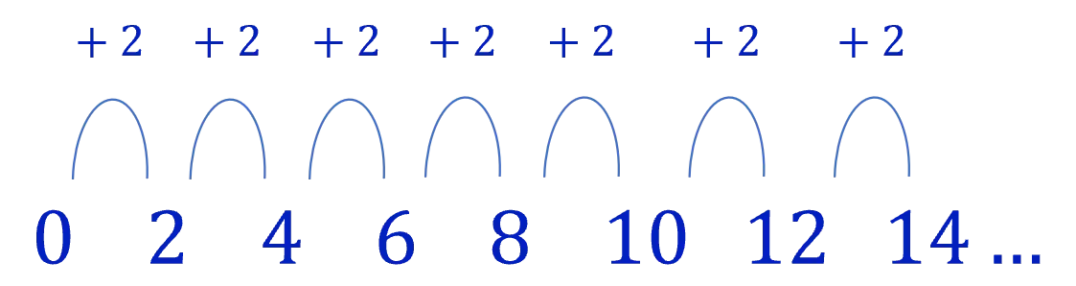
An example of a recognisable rule might be the even numbers. The sequence starts with and then each term can be found by adding to the previous term. The first terms of this sequence can be seen below.
Other examples for your child to become familiar with include:
- The prime numbers:
- The square numbers:

Finding the Sequence Rule
A skill that will be helpful for your child to develop is finding the rule of a sequence that is unfamiliar to them.
The rule of a sequence is the action that allows them to get from one term to the next. In order to find the rule that the sequence follows your child should look at the difference between the terms in the sequence.
Example: Find the term to term rule of the following sequence.
To find the difference between the terms subtract them.
The second term subtract the first term:
The third term subtract the second term:
The fourth term subtract the third term:
So, as we can see the common difference between the terms is .
Therefore, the rule for finding the next term is .
Example 1: Descending Sequence Rule
In some questions your child may be asked to find the sequence rule in order to find the next term.
a) Find the rule of the following sequence.
b) Find the th term of the sequence.
[3 marks]
a) This sequence is decreasing instead of increasing like our previous example. This means that the rule will be a subtraction rule rather than an addition rule.
Difference between the terms.
The difference between the first and second term:
The difference between the second and third term:
So, the common difference is .
Remember the sequence is decreasing so the rule is a subtraction rule and is therefore equal to .
b) Now, in order to find the th term in the sequence, use the rule we have just found to write out more terms in the sequence.
th term:
th term:
th term:
Example 2: Pattern of Shapes
Harper uses some toy building blocks to produce the sequence of blocks seen below.
If Harper continues the sequence, how many blocks will they need to make the th structure of blocks?
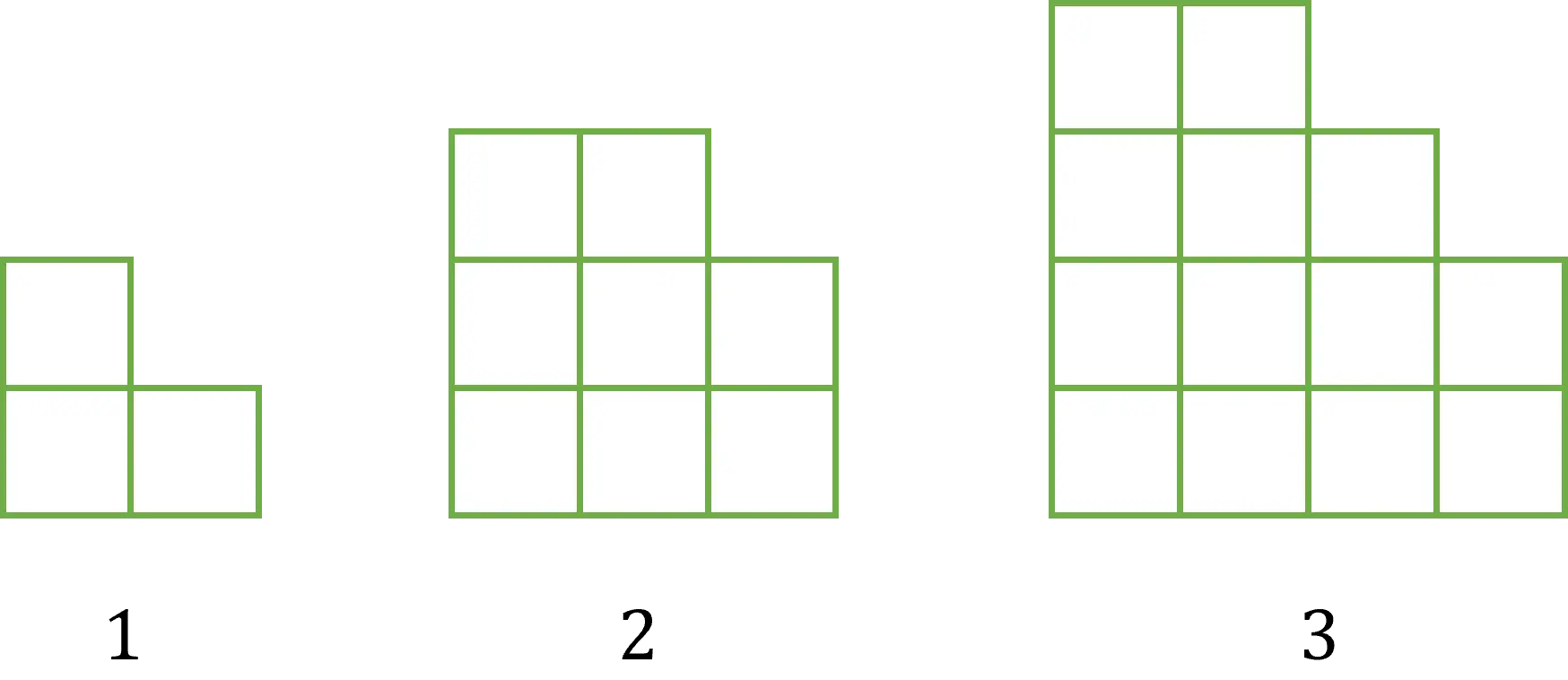
This question may seem daunting to your child but underneath the context of the question it’s just like the other sequence questions we’ve already seen.
To form the sequence as a list of numbers count the number of blocks used in each structure.
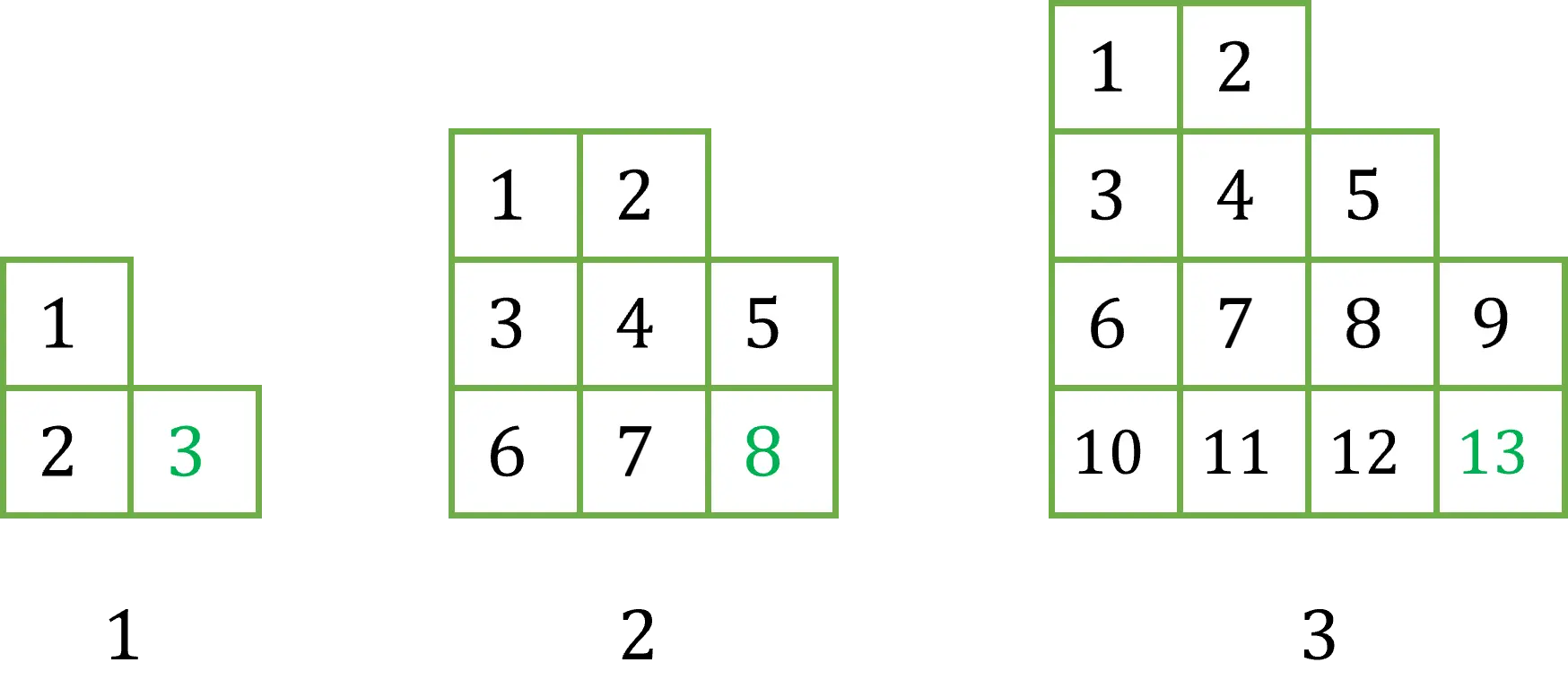
Making sure not to forget any of the blocks we can see that the sequence actually is:
So, the sequence rule can be found in the usual way.
The difference between the first and second term:
The difference between the second and third term:
The sequence rule is as the sequence is increasing.
In context this means that each new structure Harper builds, they need an additional blocks.
To find how many blocks Harper needs for the th structure, continue the sequence.
th structure: blocks
th structure: blocks
Sequences Example Questions
Question 1: Find the missing values in the following sequences.
a) ____
b) ____
c) ____
[6 marks]
a) Start by looking for the common difference.
The difference between the first and second term:
The difference between the second and third term:
The sequence is increasing.
So, the sequence rule is
Finally, find the missing term of the sequence.
b) This time the missing value is the first term so, once the sequence rule is found, we will need to use it in reverse.
The difference between the second and third term:
The difference between the third and fourth term:
The sequence is decreasing.
So, the sequence rule is .
From the missing value, the first term, to the second term we have subtracted . So, to go from the second term to the first term we need to add .
The first term of the sequence is .
c) The third term is missing but the process is the same using the differences between the first and second, and the fourth and fifth term.
The difference between the first and second term:
The difference between the fourth and fifth term:
The sequence is increasing.
So, the sequence rule is .
To find the missing third term we can use the sequence rule.
The third term of the sequence is .
Your child can check their answer by using the sequence rule on their third term to make sure the fourth term is the answer.
And is in fact the fourth term so our answer of must be right.
Question 2: Sheila counts back from in steps of .
What is the first negative number she will encounter?
[1 mark]
By counting back from in steps of we will create a sequence with the rule:
First term:
Second term:
Third term:
Fourth term:
Fifth term:
Sixth term:
We have got to a negative term so we can stop counting down.
The first negative term Sheila will encounter is
Question 3: The Fibonacci sequence has the sequence rule – start with then to find the next term add the previous two terms together.
The first terms of the Fibonacci sequence are:
What are the next terms?
[2 marks]
Using the sequence rule:
Fifth term:
Sixth term:
Seventh term: